In which I sneakily tell you about dictyostelid reproduction
Please note that everything you’re about to read applies to cellular slime molds, aka dictyostelids, not plasmodial slime molds! This is kind of like if I was telling you about bees, then randomly sidebarred to talk about scorpions, BUT this topic is really cool so we're discussing it anyway.
Now, if you’re already a slime mold fan, you probably already know why calling All slime molds unicellular can be problematic– because, situationally, some slime molds will team up to create a "body" called a Slug (though the terms “pseudoplasmodium” and “grex” are also not uncommon, this humble blogger prefers “slug” because it is cuter).
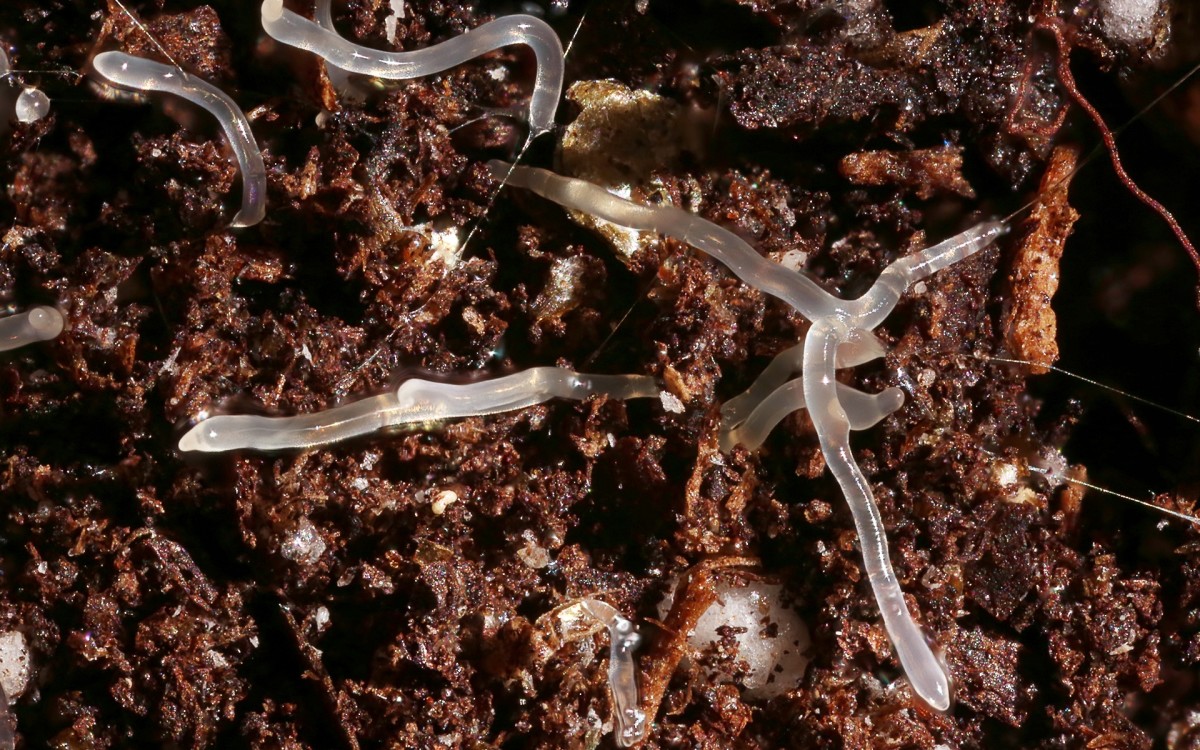
© Tyler J Larson
… Although, as you can see here, the “slugs” look much more like worms.
But, slug or worm aside, what's the point of all this nonsense?
It all starts when one or more individual gets stressed out, usually because there is not enough food or water, and it sends out a signal to all the other slimes in the area, telling them to get their butts over here!, and they sure as heck do– typically, around one hundred thousand little slime molds will all come together to form first a “mound,” which then lengthens into our friend the slug. Then, the slug might go exploring for a while, until it finds somewhere nice and warm and well-lit, before moving into the next step of this strange process...
Now, both the slug stage and the next are honestly baffling if we’re still thinking of the slug as a bunch of individuals working together, and not one multi-cellular organism. In the slug stage, the component cells will differentiate, or change to fulfill a certain role. In multicellular organisms, differentiation is the process used to get different organs; a cell in the skin will need to do different things than a cell in the brain, after all. Similarly, the cells in the slug differentiate into different roles, even forming a pretty efficient immune system!
What happens after the slug stage is when things really get weird. Once the slug is in a good place, it’ll stop and grow a “fruiting body,” or sorus, which will release loads of spores that baby slimes will hatch out of. This sorus is perched upon a long stalk made of dead cells.... dead cells!! This is the point at which the nature of this… thing… really gets called into question, at least for me. If these were a bunch of individuals, why in the world would they self-sacrifice, completely giving up their chance at reproduction, so that a bunch of randoms can do it instead?! Sure, altruism is observed in countless species from branches all across the tree of life, but to this extent? Literally built in to the life cycle? For a multi-cellular organism, killing some cells for the benefit of others is perfectly normal, but for single-celled life..? That's a very very stupid thing to do! Therefore, can we really call these guys individuals anymore?
Quick intermission to look at cool slug pics while we ponder this quandry.
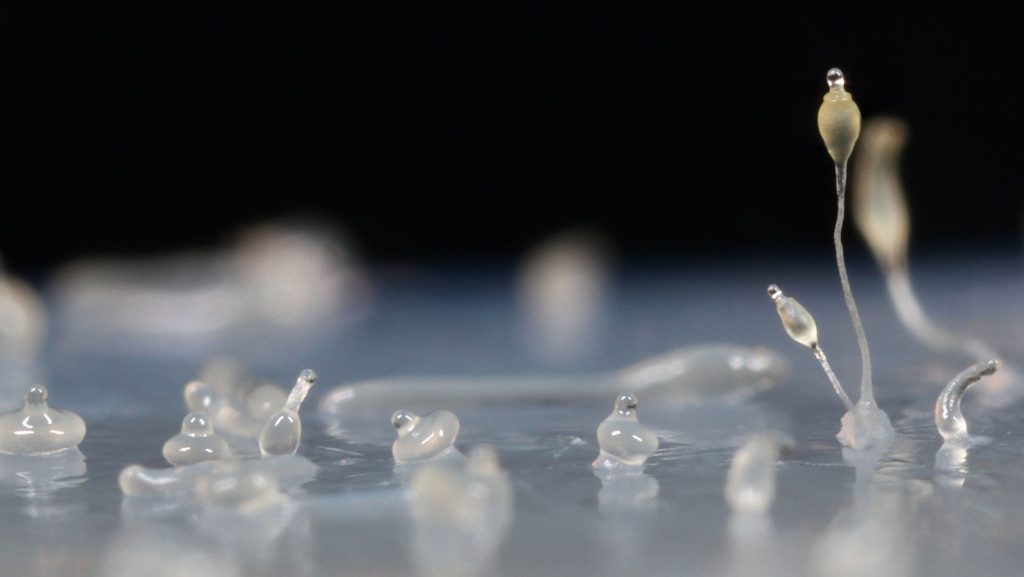
© Usman Bashir
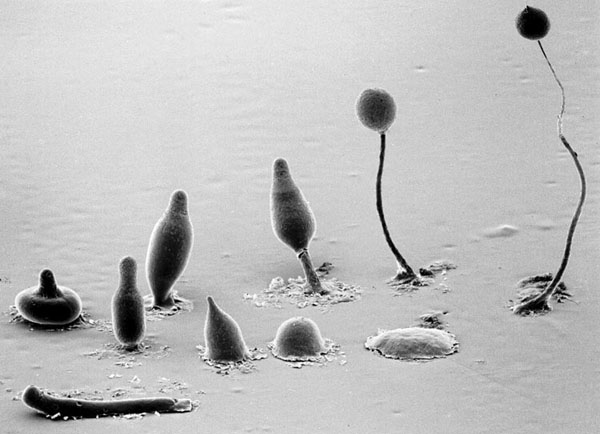
© MJ Grimson & RL Blanton

© Jeremy Pickett-Heaps
Okay. Are we calm and composed? To review:
As we’ve learned, aggregated dictyostelids seem to behave very much like a singular organism. It moves as if it were one organism, it has differentiated cells as if it were one organism, it selectively kills cells as if it were one organism. So... is it one organism? If it is, when does it stop being a bunch of organisms and become the one?
Unfortunately, the answer to that is... I have no freaking clue!!! If I’m being honest, it’s the sort of topic that feels much too philosophical, and ultimately this is a science blog. However, do know, dear reader, that the line between a bunch of cells being friends and a multicellular organism is much fuzzier than anybody likes, and it does indeed keep your humble author up at night.
Thanks for reading!