On the first day of Crittermas, my true love was a bug
Called the Spotted Lanternfly~
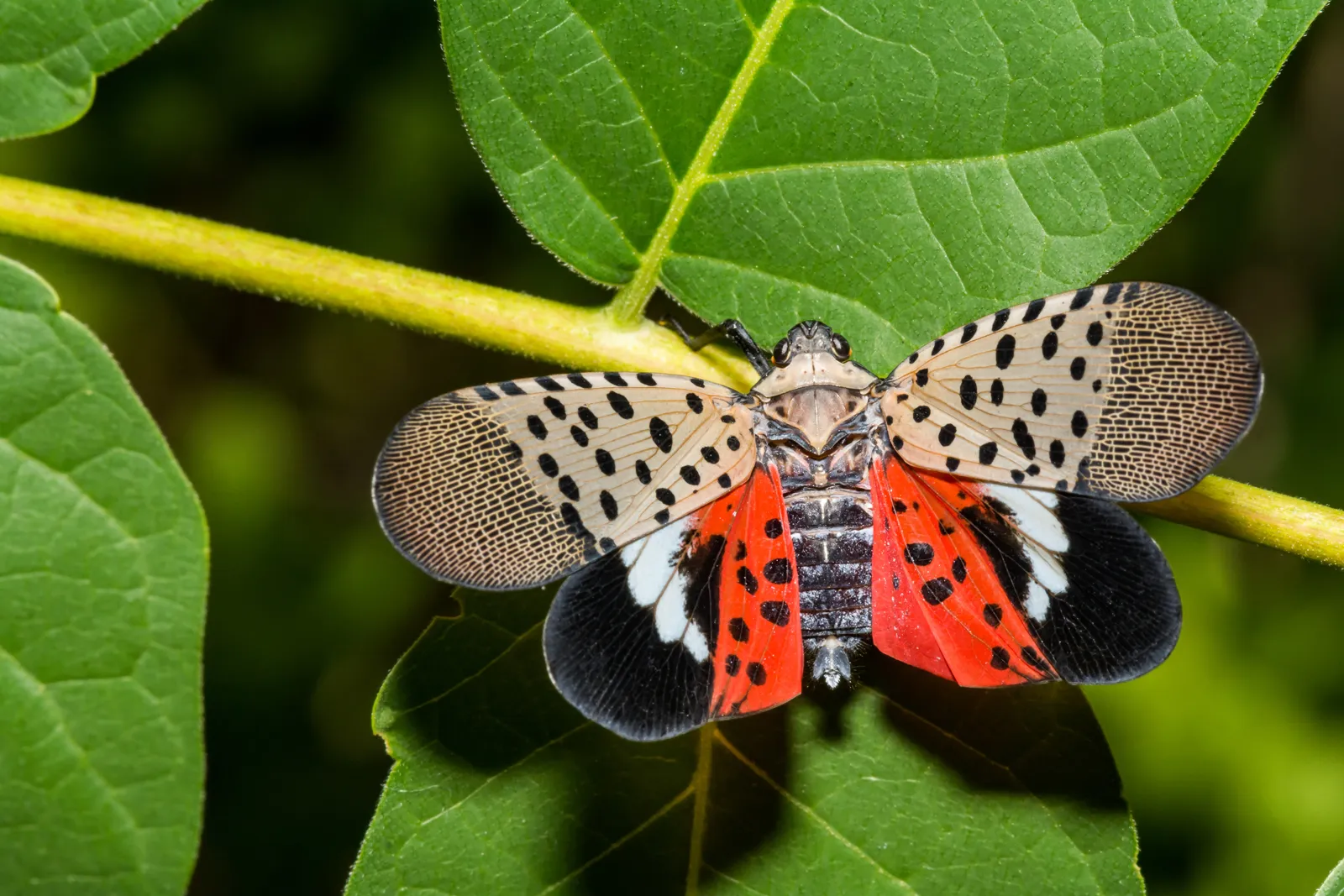
© Jason Ondreicka
If, dear reader, you are tuning in from the eastern United States, you have heard all about spotted lanternflies. They appeared suddenly a few years ago, and now every fall they explode in population and you see them everywhere. You know your mission, though:
Squash every last one of those suckers!
And this is just my personal observation, but it does seem to get harder every year, doesn’t it? They keep getting better at escaping!
We might be observing some small-scale natural selection here; the lanternflies with quicker reaction times survive stomping season, and they pass these reflexes on to next year’s lanternflies, and with every successive generation they get better at evading our attempted population control. Even the coming-in-from-the-front tactic has been getting less successful!
But, while we’re on the topic of their get-aways, why do they tend to hop away? They got those big ol’ wings, why not just fly?
Well, as it turns out, those big ol’ wings don't.. really do much...
Lanternflies are a type of bug called planthoppers, and the name really says it all here. They like plants and they hop a lot. The babies especially– they don’t grow their wings until reaching adulthood, if you're a baby lanternfly (called a nymph), and you need to get somewhere, what else is there to do if not jump there?!
Even as adults, a lanternfly will not use those wings to fly long distances. You might see them fluttering about down the block, but they’re not about to cross the whole city, you know?
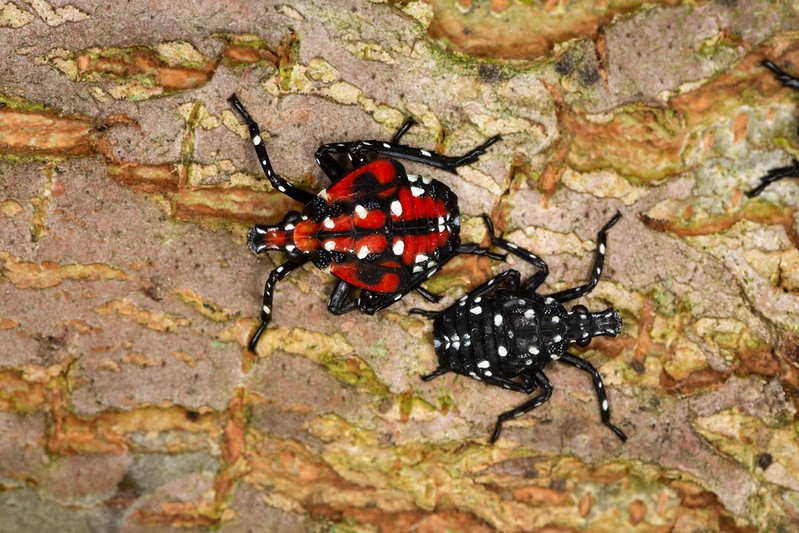
© Stephen Ausmus-- these are the nymphs. You gotta step on them, too.
As for the plant half of planthopper, as you might have guessed, that part comes from how lanternflies are herbivorous, and spend much of their time hanging out on their favorite snacks.
The only problem is… we have some of the same favorite snacks!!
Indeed, if you know just one thing about why lanternflies are so bad, you’ve heard about their impact on vineyards. Like humans, lanternflies think grapes are absolutely de-lish (well, they like the grapevines, not the grapes themselves, but the result is the same), though they’re also fans of hops, trees bearing apples, stone fruits, and nuts, maples, oaks, pines… all the stuff we humans like! And anything lanternflies like to eat, they will end up completely swarming.
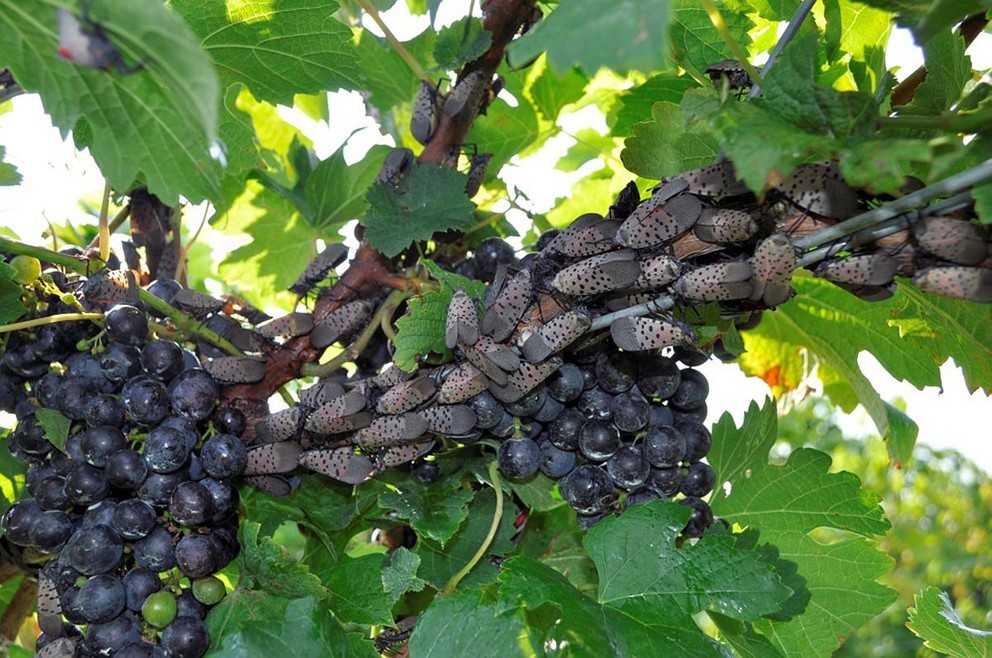
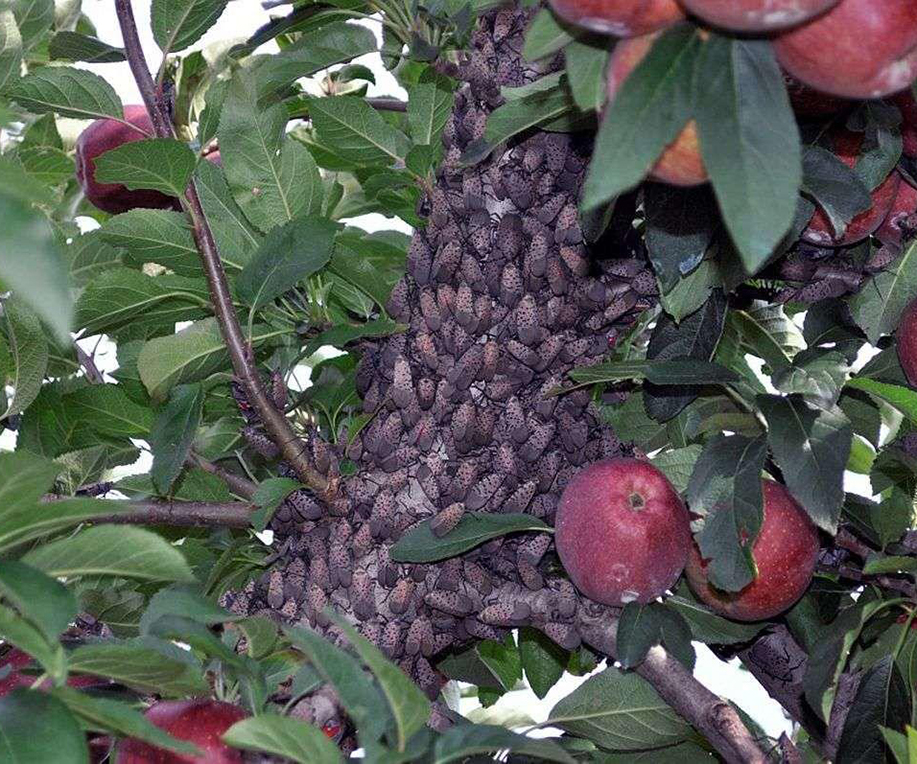
© Erica Smyers
Of course, this isn’t a super fun time for whatever plant they’re eating. Not only will it have to deal with being feasted on by a bunch of little bugs, but like many insects, lanternflies secrete a sugary waste product called honeydew that just so happens to be the favorite food of sooty mold, which will stick around long after all the lanternflies are gone. This mold growth can smother the plant, including its leaves, reducing photosynthesis and just making everything all-around worse.
A plant dealing with a lanternfly infestation is prone to wilting, loss of leaves, and reduced fruit production– and that’s assuming it doesn’t just die.
Plants dealing with lanternflies can get seriously sick, and entire orchards, vineyards, forests, and so on end up with serious damage. This, dear reader, is the reason spotted lanternflies are invasive in North America.
Spotted lanternflies are native to eastern China, also home to their “intended” food source, the tree-of-heaven.
As it happens, the tree-of-heaven is also an incredibly invasive species in North America. You’d think the lanternflies would take advantage of this miraculous coincidence and stick to what they know, but alas. They don’t care that their favoritest food ever is literally right there, why in the world would they care when there’s some vineyards they can wreck instead? Like, as a prank, I guess?
Not cool guys. Not cool.
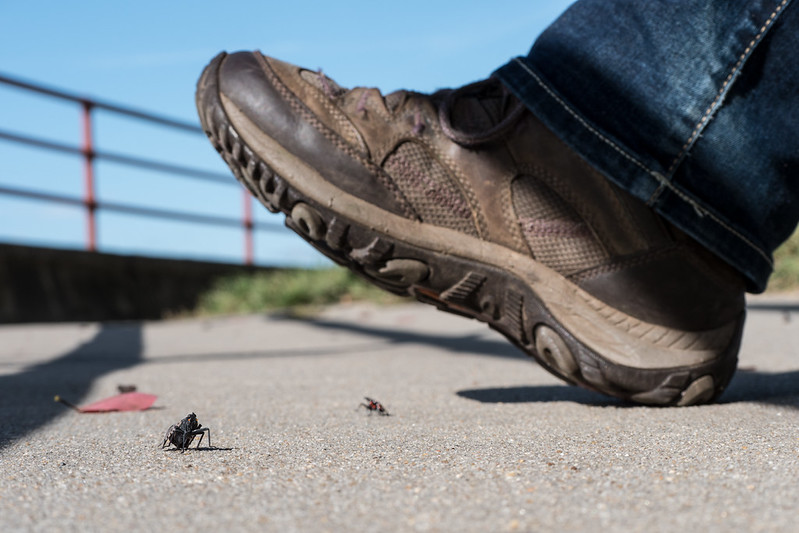
© Lance Cheung
Now you know that you don’t need to feel bad about stepping on lanternflies! Usually I’d argue that animals can’t be mean or evil because they don’t have big enough brains to understand morality, buuuut... IDK, lanternflies are kind of toeing the line, aren't they?
.
.
.
.
.
Shoutout to this Flickr album for being the source of most of my images. However, it sort of backfires in its goal of teaching viewers how to be the most effective enemies of lanternflies they can. A lot of these photos make the lanternflies look cute and silly or even bad-ass. Like, look at this set:
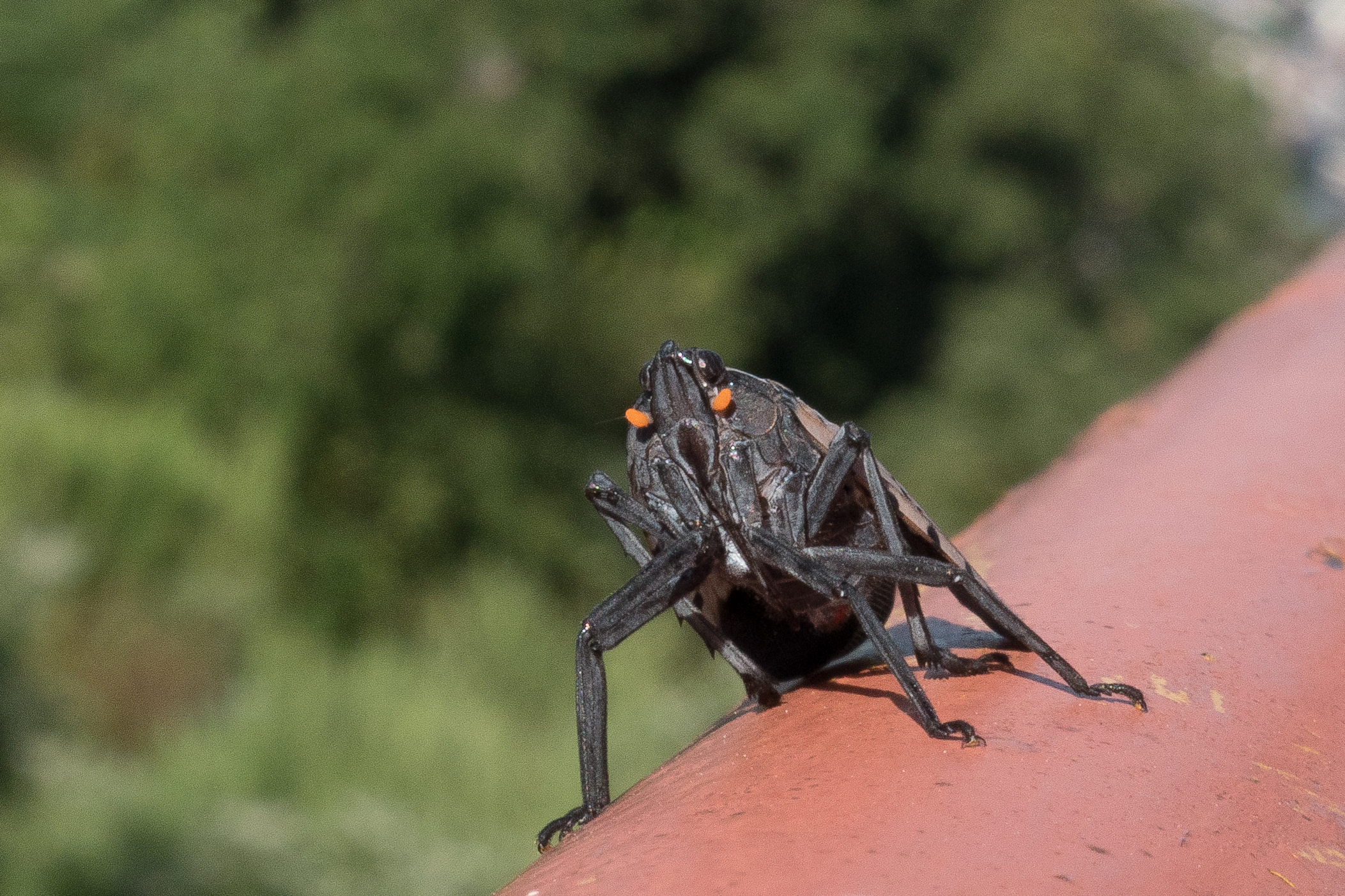
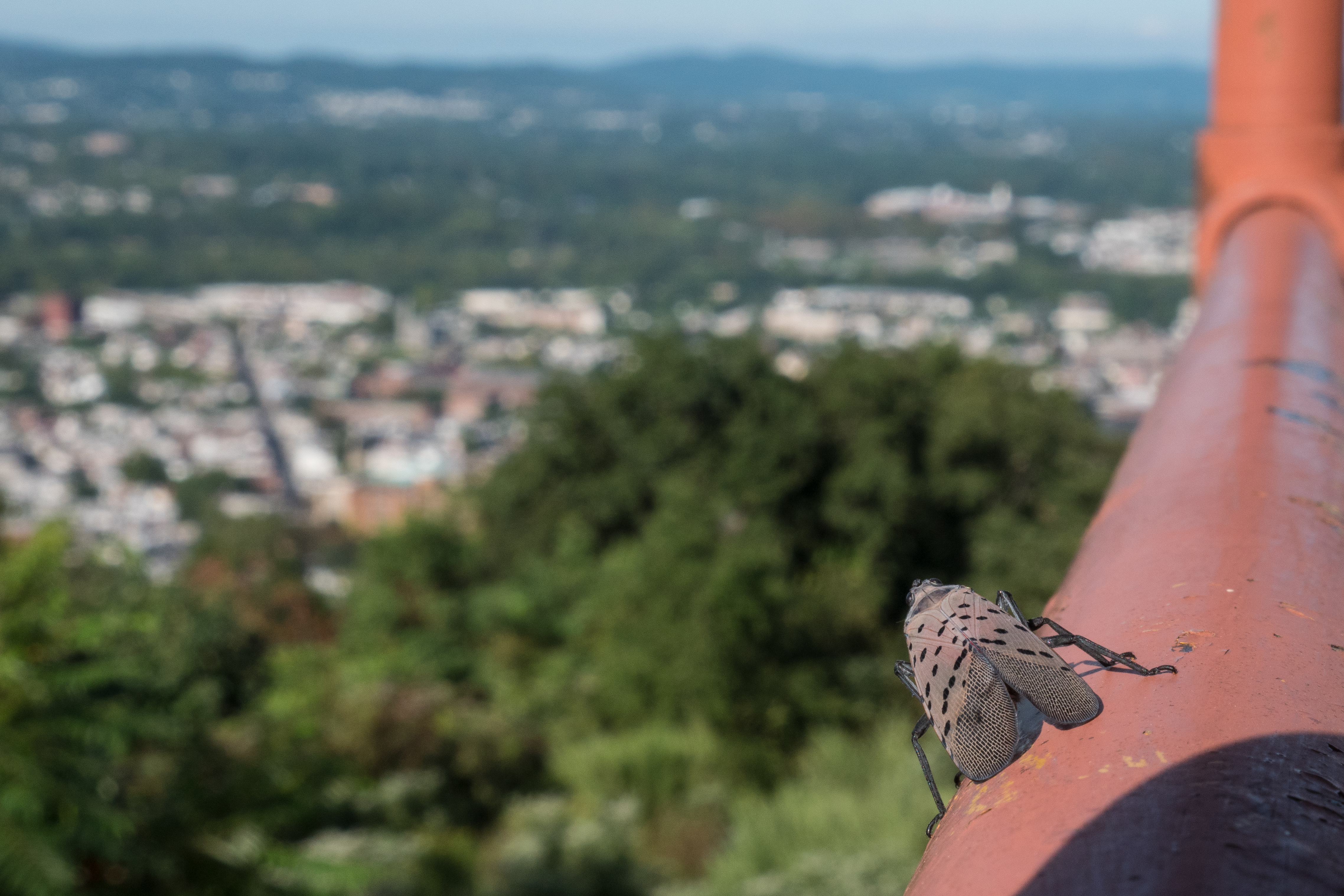
© Lance Cheung
This guy just looks so full of wonder. Little bug with big dreams. I would root for him if he were the protagonist of a quirky bug movie.
Also, if you were wondering, the orange things below the eyes are antennae! Planthoppers decided to get silly with it and stick their weird, bulbous antennae below their eyes. They just want to be different, I guess.
Also also, the most common question I got when I told people I was doing a lanternfly post was “why are they called that?”. Really, nobody’s quite sure, but there’s a few proposed explanations:
They don’t light up, but their colorful hindwings showing through semi-transparent forewings can give the impression of a soft red glow, so that’s some people’s best guess as to where the name came from. Other explanations claim that entomologists misunderstood descriptions of the bug, causing them to believe that they glow, and others still say it’s based on folktales featuring bioluminescent lanternflies.
The main takeaway here is that, contrary to what the name implies, lanternflies are decidedly unlike lanterns.
Happy stomping!