Welcome to the very first installment of Creature Feature! Wahoo! For the inaugural post, it only seems right that we start with my very favorite organism in the whole-wide-world… drumroll… Tardigrades!
You knew that, you read the title.
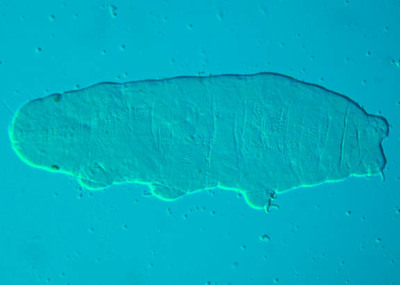
Specifically, I really like a type of tardigrade called the “eutardigrades.” They are your very generic tardigrade, the little lumpy guy that comes to mind when somebody says “I love tardigrades!”
© Claudia Mormino
Like… look at him… precious little baby.. Heart ♡
There are other types of tardigrade of course, but this installment is all about Eutardigrada. I’m gonna be saying “tardigrade,” but keep in mind that from here on out I am specifically talking about the eutardigrades.
Anyways, tardigrades are micro-organisms, meaning they’re usually too small to see without any tools. Despite this, they decided to opt for a body plan more typical of larger critters, equipped with eight stubby little legs. When you’re so tiny, it is very difficult to move around all walking-style, hence the name “tardigrade” – it means “slow walker!”
Though, side note, you might have also heard of tardigrades being called “water bears.” This sounds like a cute nickname given later, but in fact predates the term “tardigrade” by around three years! When they were very first described by some guy named Johann, he called them “little water bears.” Cute, right?
Anyways, back on track. You’re probably wondering why these very little guys would have legs when they’re so darn inefficient for getting around in a tiny world. Well, scientists think that, once upon a time, tardigrades weren’t tiny.
You see, tardigrades are descended from a now-extinct group of animals called the lobopodians, which were macro-organisms (big enough to see without any tools). Lobopodians are named for their "lobopods," which is a very scientific term that means "cute little stubby legs." Scientists can be so unserious sometimes... "look guys, I discovered a new group of animals! I think I'll call them 'stubby-legs!'" "Oh heck yeah man. That's awesome." And it is awesome.
The largest lobopodian fossils we’ve found were almost eight inches long, in fact– not very microscopic at all! For them, having legs was a great way of moving around and living life; in fact, the most famous lobopodian, hallucigenia, had around ten pairs of them!!!! That’s just ridiculous. I love that.
Another reason tardigrades can get away with their stupid (affectionate) little legs is simply the fact they don’t really need to move that much. Tardigrades usually live on plants and lichens, which are (not-so) coincidentally some of their favorite foods. Besides that, they really aren’t picky. Tardigrades are omnivorous and will snack on just about anything that fits in their mouth hole, be it plant, animal, fungus– even protists! (which isn’t actually crazy, it just sounds out-there because most people don’t know what a protist is.) (For those that don’t know, a “protist” is any eukaryote that doesn’t fit into the main three categories of plant, animal, and fungus. If you’re still curious, don’t worry! The next CREATURE FEATURE will be about my favorite protist, and I will make sure to go over the protist-basics. So more on them coming soon!)
Okay, I know you’re waiting for me to bring up the Thing tardigrades are known for, the Thing they’re all about, the Thing Every GoshDarn youtube video on them is about, but before we get there I just want to share something that I find very cute…
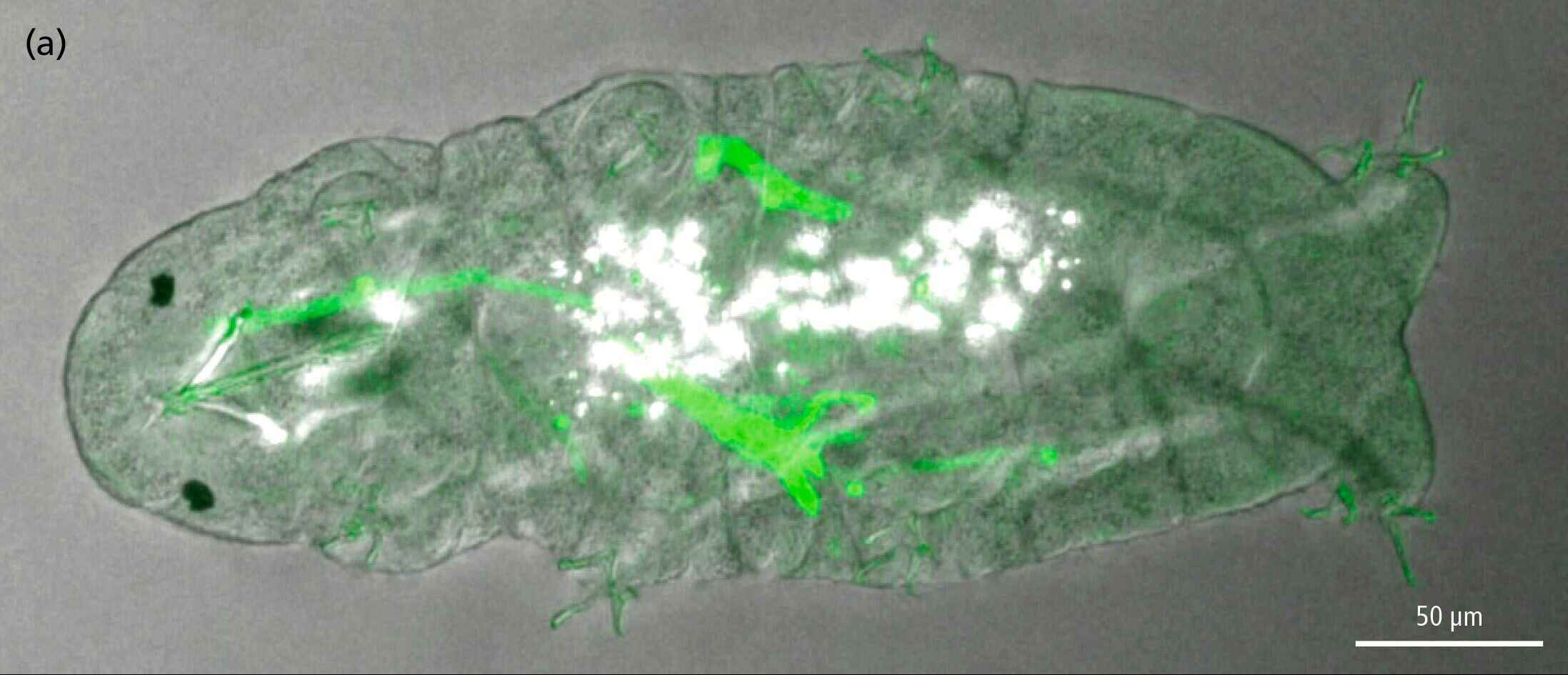
… did you know tardigrades have little eyes? And that those eyes are attached directly to their tiny little brains? Because these guys also have brains!?
Okay, okay, they aren’t technically eyes, and they aren’t technically brains. Since these structures are so small and simple, you’re supposed to call them “eyespots” and “ganglia” respectively, but they serve the same basic functions! This is just non-scientific speculation on my part, but these organs, just like their legs, are probably remnants of more complex structures had by their ancestors.
© Kazuharu Arakawa
In most “actual” images of tardigrades (as opposed to artistic renditions or electron scans), these eyespots are visible, and it makes them look very silly indeed, like little cuties that deserve the world. Because, to be clear, they are little cuties and they do deserve the world. To quote the Bible (and this is the actual passage, don’t bother fact-checking), blessed are the tardigrades, for they shall inherit the Earth...
...literally?
That was a good segue, right?
We’re talking about that Thing now, by the way.
That Thing’s sciencey name is cryptobiosis, something done by a whole bunch of organisms, not just tardigrades. There’s a lot of different ways of doing it, but the bottom line is, when something undergoes cryptobiosis, it stops everything it’s doing and just chills for a while. And when I say everything, I mean everything– metabolism completely stops. And when I say “for a while,” I mean that, depending on the species and the situation, an organism can stay like this for anywhere from a few minutes to a few decades.
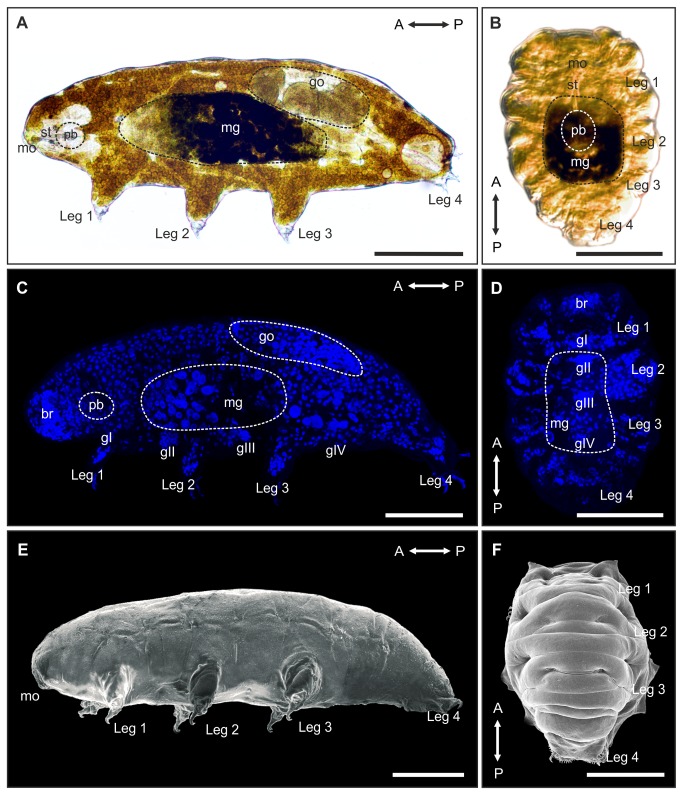
Tardigrades are capable of performing multiple types of cryptobiosis, but the one that made them famous is the most common, called anhydrobiosis, the response to desiccation. When a tardigrade’s environment becomes too dry, they draw in their legs and contract their body while simultaneously slowing down their metabolism until it stops. By the end, they’ve squished themselves into a little eggy shape, and have entered their dormant “tun” state. By just hanging out like this for a while, tardigrades become capable of surviving some things that are honestly just ridiculous.
© Agerlin Halberg, Aslak Jørgensen, & Nadja Møbjerg
A "hydrated" tardigrade, and a tardigrade in the tun state.
Really, most scientific study of tardigrades in their tun state can be described as "super mean!" Dormant tardigrades have endured being frozen down to only one degree above absolute zero, heated to temperatures above 300 degrees Fahrenheit, being blasted with 6200 “Gray” of radiation (for context, as little as 5 Gray can kill a human), being shot with bullets, and even the Actual Literal Unprotected Vacuum Of Outer Space. Thrice, actually! Scientists decided that they had to triple-check that tardigrades could survive, let me repeat, SPACE, idk just in case the first two times were flukes or something?
They weren’t flukes, just to be clear. Tardigrades really are that crazy tough. In the original space experiment, after being in The Void for ten days, researchers found that, as long as the astronaut-tardigrades were protected from UV rays, they were more likely than not to survive, and after being rehydrated, they just kept going on with their little water-bear-business as if nothing happened; many were even able to reproduce as per usual! They’re little troopers!
People often say that cockroaches will outlive us all in the nuclear apocalypse or what have you (some have said the same of plants like ferns and ginkgos), but it seems to me that if anything would survive that kind of carnage, it would be the precious little babies we call tardigrades.
...
...Okay actually I won’t BS you. I think the guys with the best chance are the little anaerobic bacteria that live in and around deep-sea hydrothermal vents. Those ecosystems are nigh indestructible, so long as the vents keep pumping out those yummy minerals and such...
Memo to myself, do a Feature on hydrothermal vents at some point...
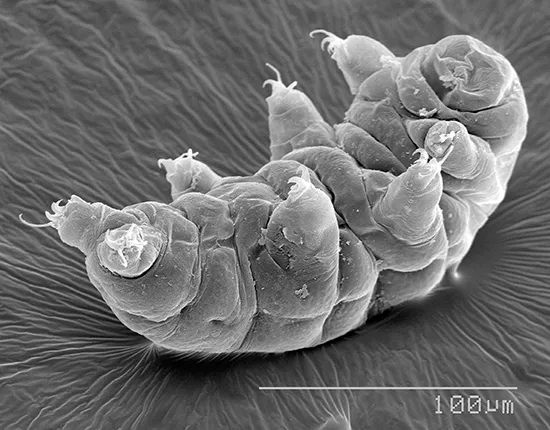
And now, before I send you off, have some pictures of tardigrades that I Think Are Pretty Cute!
© Gregory S Paulson
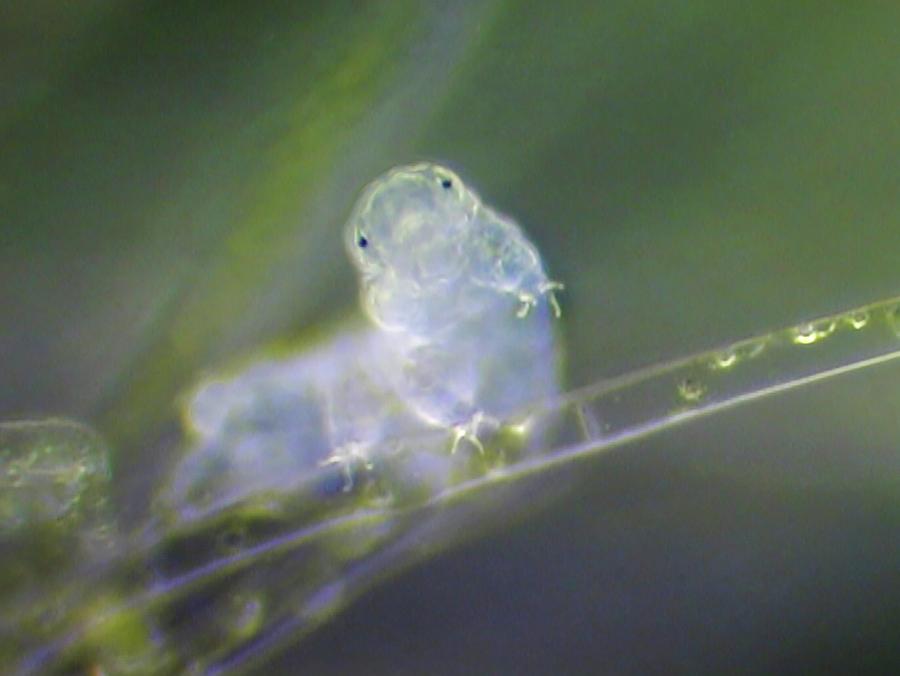
© Sinclair Stammers
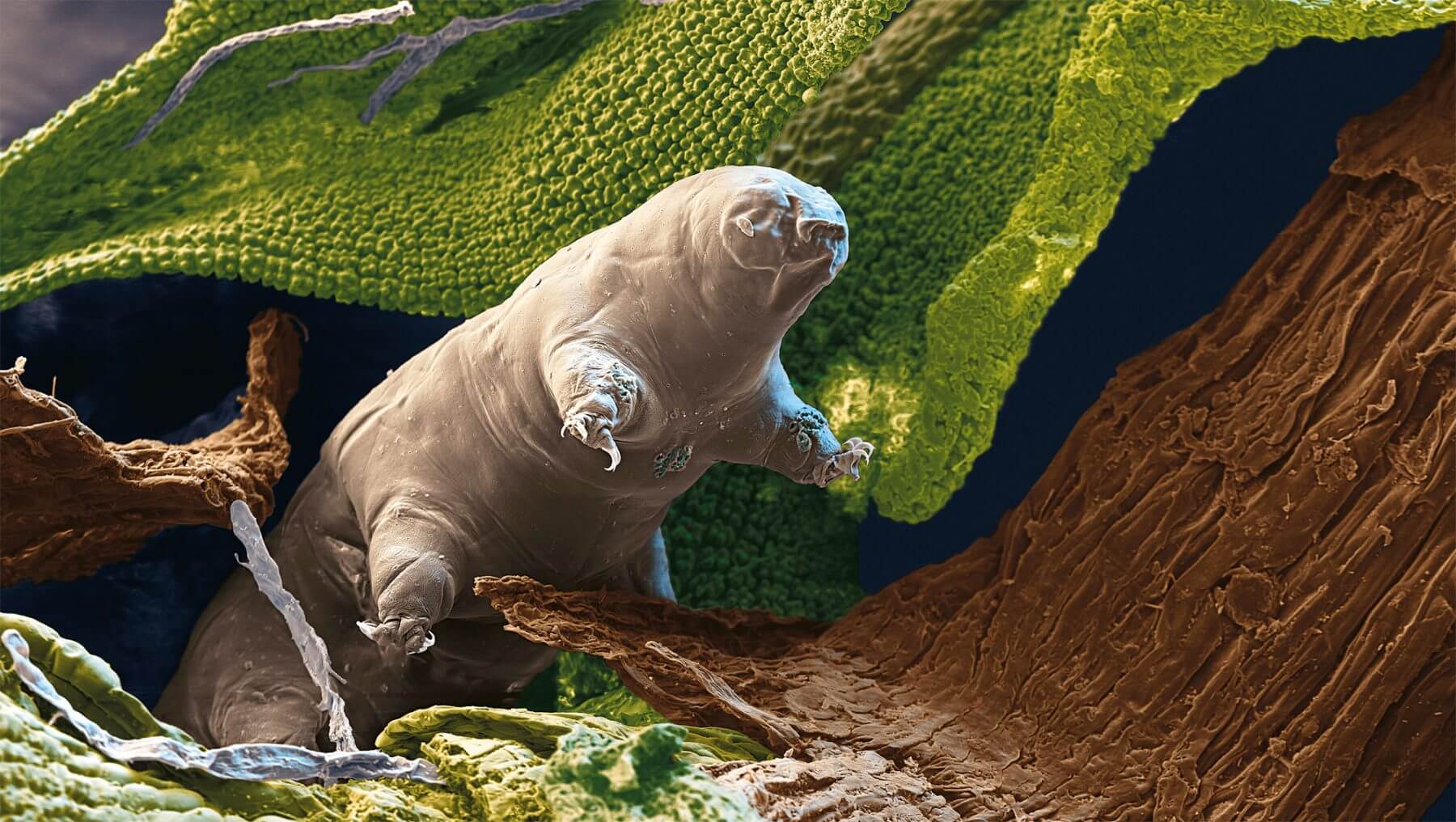
© Oliver Meckes & Nicole Ottawa
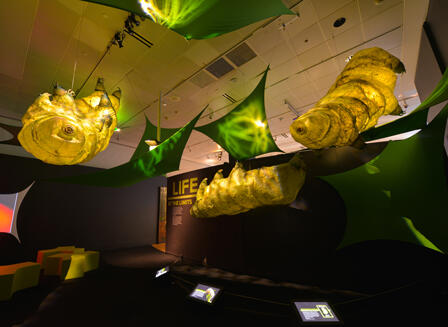
© American Museum of Natural History
(The American Museum of Natural History has some giant tardigrades. I didn’t know they were there until I saw them in person, and let it be known I was Incredibly Delighted. I hope to go back soon, and I will definitely get pictures to put here!)